
 APT
APTFrom Ransomware to Anonymous Browsing: Ten 2014 Tech Trends
Kaspersky Lab experts analyze the security and privacy trends that emerged in 2014, including anonymous Tor browsing, ransomware, APT attacks and more.

“We are what we pretend to be, so we must be careful about what we pretend to be.” ― Kurt Vonnegut
171 articles
Kaspersky Lab experts analyze the security and privacy trends that emerged in 2014, including anonymous Tor browsing, ransomware, APT attacks and more.

Kaspersky Lab experts make predictions about what trends will emerge in the security industry in 2015.

A new APT campaign called Regin targets the usual victims plus a prestigious cryptographer and the GSM standard on which most cellular communications occur.

The Electronic Frontier Foundation recently graded a slew of mobile and Internet messaging services based on security and privacy. Here we list the low scorers.

The Electronic Frontier Foundation recently graded a slew of mobile and Internet messaging services based on security and privacy. Here we detail the top scorers.

Yesterday, researchers disclosed a powerful iOS vulnerability that is responsible for the WireLurker Apple malware.

Apple malware targets iOS by infecting OS X machines and then swapping legitimate apps for malicious ones as soon as an iOS device connects via USB.
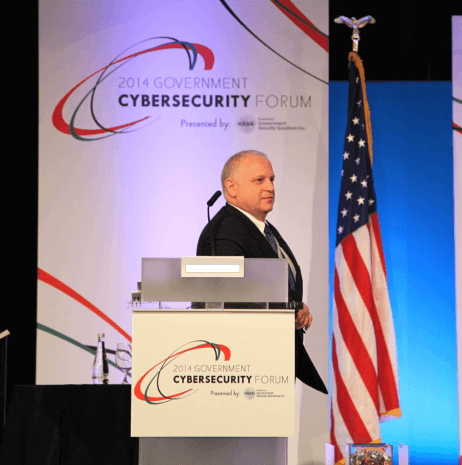
Brian Donohue reflects on Kaspersky Government Cybersecurity Forum discussions about cyber-resiliency. We all know what resilience means. Technically speaking though, what does it take to be resilient on the network level?

Brian Donohue and Dennis Fisher talk about a new attack on the SSL protocol, which is now known as POODLE.
Twitter debuts a grand but simple plan to replace passwords where your phone number is your username and an SMS-generated code is your password.

Google’s mobile operating system joins Apple’s iOS in offering full disk encryption by default to all users in its newest version — Android 5.0 aka Lollipop.

New research shows that studying and mnemonic devices could help us to better remember our passwords.

A massive provider of insurance for bond investments misconfigured one of its servers and accidentally made a variety of sensitive payment information indexable.

Virus Bulletin is a traditionally enterprise-focused event, but each year topics of consumer interest, like Apple malware, hackable devices and Bitcoin are presented.

The Bash vulnerability affecting Unix, Linux and OS X systems is the latest Internet-wide bug to emerge, and a number of experts are saying it’s more dangerous than OpenSSL Heartbleed.

Brian Donohue interviews Adam Firestone, President and General Manager of Kaspersky Government Security Solutions, about why critical infrastructure systems are insecure, and why added on security does not work.

Cyber-resilience is the ability to sustain damage, but ultimately succeed. In order to be resilient, businesses need to have a plan. One organization is dealing with attacks today that another will deal with tomorrow. There are ways businesses can help each other become cyber-resilient.

A number of popular Android applications are putting sensitive user data at risk of exposure because the app developers are not fully implementing encryption.

New mobile and wearable devices offer users a robust set of innovative features and utilities but they often face the same traditional threats as old fashioned computers.
Malvertising is an ambiguous term referring to malicious online advertisements; some cause malware infection while others track user behavior.

Brian Donohue and Chris Brook recap the month’s security headlines from its beginnings at Black Hat and DEFCON, to a bizarre PlayStation Network outage.
 9 predictions
 #advice
 cyber-resiliency
 data security
 apple security
 critical infrastructure