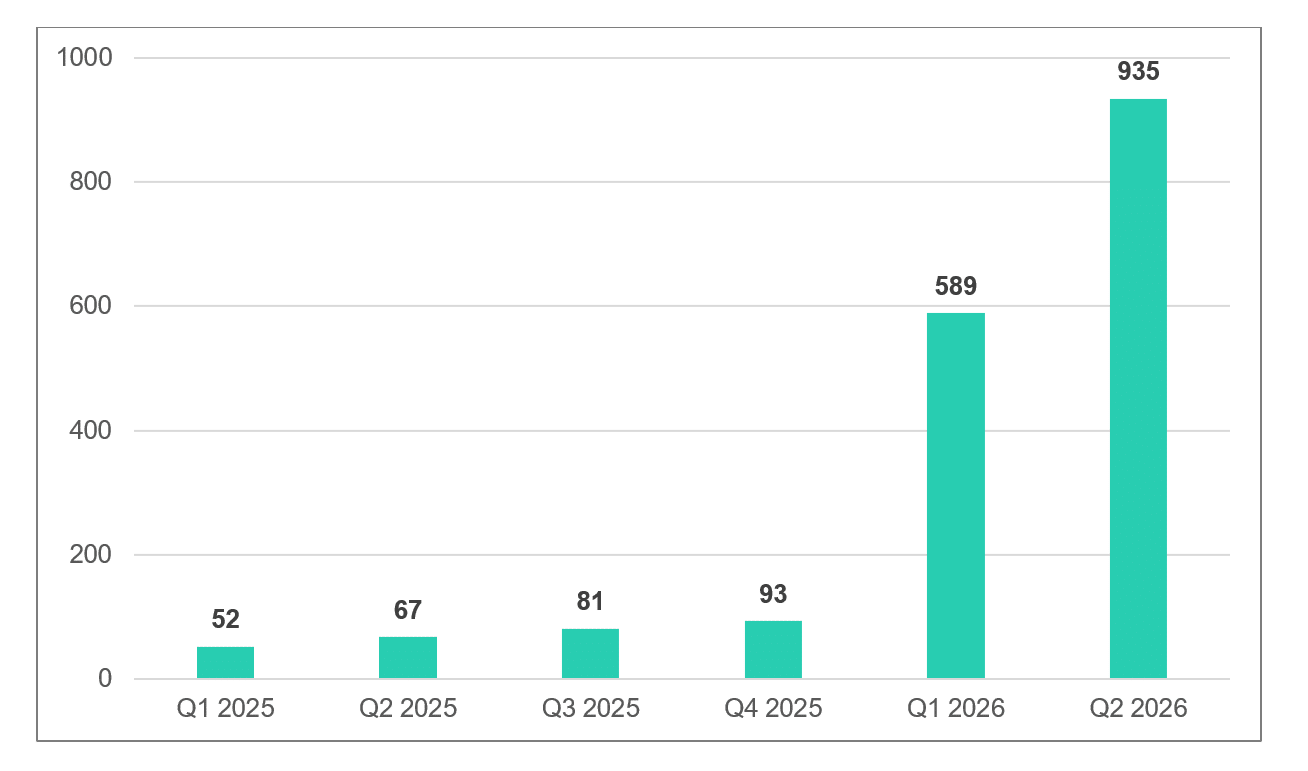
The growing adoption of artificial intelligence (AI) is happening across multiple sectors and has also led to an increase in the number of vulnerabilities discovered within AI services. Kaspersky’s Quarterly Exploits and Vulnerabilities Report highlights a notable trend: according to Kaspersky Vulnerability Management data, in Q2 2026 the number of recorded vulnerabilities in AI and LLM services has increased by 10 times since Q4 2025, reaching 935. The number of critical vulnerabilities sits at 119 in Q2 2026, which is almost 5 times the number recorded at the end of 2025.
The analysis of the most common vulnerability categories indicates that the primary issues in AI‑related software are weak access‑control mechanisms for critical system objects, improper implementation of authentication and authorisation, and injection vulnerabilities.
 “Tools, plugins, and AI
technologies help to effectively automate tasks, but the rapid adoption of AI
across organisations is creating new security challenges. Weaknesses in access‑control, authentication, and injection handling are emerging as
the most frequent vulnerability types. To stay protected, organisations need
real‑time visibility into their
infrastructure and access controls, not just traditional patch‑management, so they can detect and stop threats at the right
moment,” comments Alexander Kolesnikov,
Malware Expert at Kaspersky.
“Tools, plugins, and AI
technologies help to effectively automate tasks, but the rapid adoption of AI
across organisations is creating new security challenges. Weaknesses in access‑control, authentication, and injection handling are emerging as
the most frequent vulnerability types. To stay protected, organisations need
real‑time visibility into their
infrastructure and access controls, not just traditional patch‑management, so they can detect and stop threats at the right
moment,” comments Alexander Kolesnikov,
Malware Expert at Kaspersky.
In the recent Kaspersky SMB report, it is mentioned that in the first 4 months of 2026, Kaspersky security solutions detected more than 33,300 attacks on small and medium-sized businesses in which malicious or unwanted software for PCs were disguised as popular AI-services. This number has surged by almost 5 times when compared to the same period in 2025, which draws attention to the fact that the more AI services are used, the more attempts there will be to attack them.
Kaspersky recommends organisations to protect corporate infrastructure by using solutions such as from the Kaspersky Next product line that delivers continuous monitoring, proactive protection, and rapid response capabilities that keep AI‑enhanced environments secure.
The full report is available on Securelist.com.


