Following the official launch of Grand Theft Auto VI game pre-orders late June, which attracted significant attention, threat actors quickly began exploiting the event as a lure. Scammers leveraged the heightened demand to deploy deceptive schemes, from fake pre-order pages to fraudulent video tutorials, targeting users eager to secure their copy of the game. Kaspersky experts are showing the key schemes used by attackers and offering guidance on how to recognise and avoid falling victim to fraud.
Fake storefronts but real losses: The pre-order trap
Fraudsters have been setting up fake websites that closely replicate the visual style and branding of the official game. These pages feature genuine trailers and promotional artwork, offering users the option to pre-order the game for various consoles. After clicking "Pre-order now," users are prompted to enter their personal details and payment information to complete the purchase. However, no game is ever delivered — instead, victims risk having their bank accounts drained and their personal data compromised.

Examples of fake websites designed to mimic official pre-order pages.
Kaspersky experts have detected such fraudulent pages in multiple languages, indicating that scammers are actively targeting players across different regions. One notable example is a website impersonating the official PlayStation storefront. To create a convincing illusion of legitimacy, the attackers populated it with fabricated five-star reviews, an age rating and a displayed pre-order price. Upon clicking the pre-order button, users are redirected to a registration form requesting their name, email address, phone number, individual taxpayer identification number and other personal information.
From there, the victim is asked to pay by entering bank card details or choosing an alternative payment method. Once the transaction is completed, both the user's personal data and financial credentials are left entirely in the hands of the attackers.
Not just pre-orders: Fake beta access as the next bait
Malicious activity often relies on a coordinated, multi-channel approach to broaden reach and reinforce credibility. In one such case, a suspicious website was identified offering what was described as a beta version of the game for download, with the offer framed as a leak. The website was promoted through video platforms and social media, where numerous accounts shared videos purportedly showing how to download the game file “safely”. To further reinforce credibility, comments posted alongside this content claimed that the download contained a genuine version of the game. Once launched, the file can compromise the user's device, potentially leading to the theft of sensitive data, unauthorised access to personal accounts, or the installation of malware operating silently in the background.
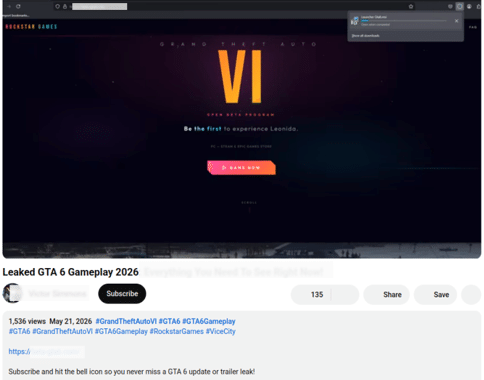
Example of a video tutorial which leads users to download a file under the name ‘GTA VI beta’.
From virtual worlds to virtual wallets
Cryptocurrency users are also being targeted through suspicious, low-reputation websites. In one case, a site was identified promoting a token with a name resembling the game’s title. The page imitated the game’s visual style and used its logo to create a strong visual association with the game. Such websites should be treated with extreme caution, as engaging with them may result in the loss of crypto assets.
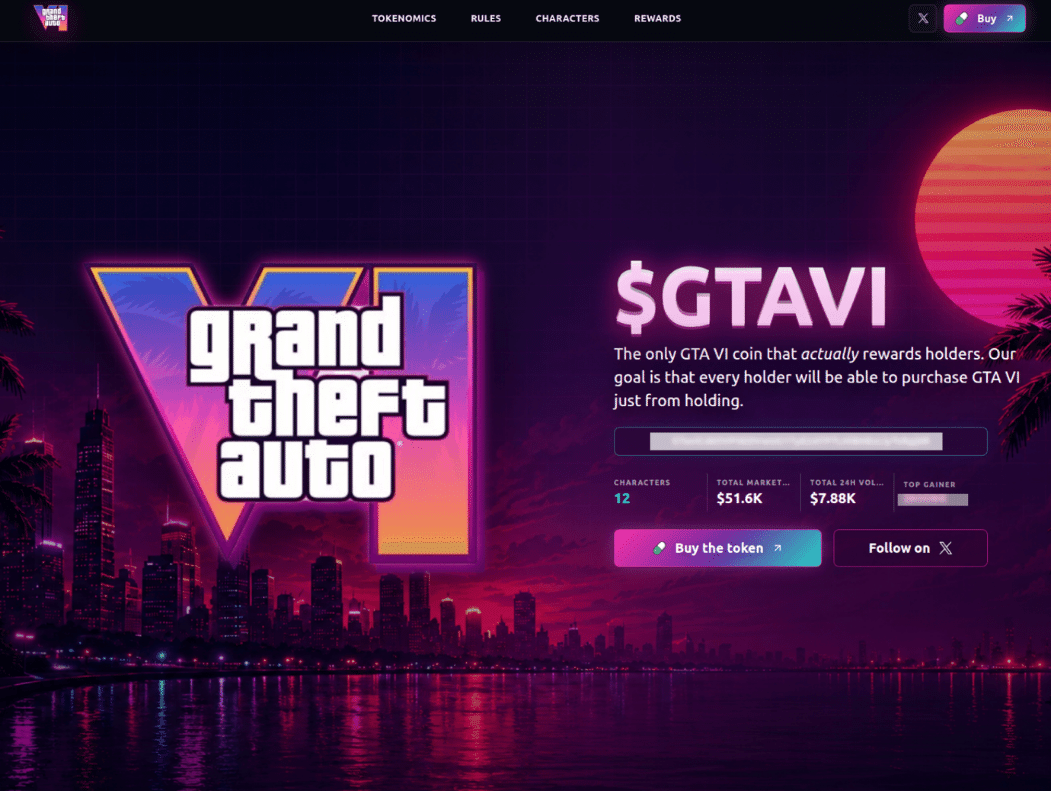
Example of a suspicious website promoting a cryptocurrency token.
"Highly anticipated game releases have long presented significant opportunities for cybercriminals, and we are already detecting related fraudulent activity. These schemes are carefully timed to capitalise on heightened consumer excitement: attackers understand that periods of intense anticipation can lower users’ guard and create a false sense of urgency. We strongly recommend that users complete purchases exclusively through official platforms, refrain from following links shared by unverified sources. Equally important is robust protection – and our solutions now include AI-powered scam protection," says Olga Altukhova, Senior Web Content Analyst at Kaspersky.
To enjoy new game releases without worrying about cyberthreats, Kaspersky advises users to:
- Be cautious with downloads. It’s safer to install games and mods only from official sources or reputable websites. Unofficial sources may contain malware.
- Check the authenticity of websites before entering personal data. Double-check URL formats and organisations name spellings.
- Secure your payment information. Use prepaid cards or a dedicated payment service for gaming purchases to avoid exposing your credit card or bank account information.
- Use a reliable security solution such as Kaspersky Premium that identifies malicious attachments and blocks phishing links. To ensure advanced protection against increasingly complex cyber threats, Kaspersky actively amplifies its consumer solutions with AI-powered scam protection – a unified suite of technologies that combines machine learning-based anti-phishing algorithms, real-time behaviour monitoring, accompanied by Data Leak and Identity Theft checkers. In 2025, Kaspersky Premium once again received the annual "Approved" certification in Anti-phishing tests by the leading testing lab AV-Comparatives, highlighting the product's strong, AI enhanced antiphishing capabilities.
- Enable multi-factor authentication and monitor accounts: Activate 2FA on IDs and financial apps and regularly review statements for unauthorised activity.


